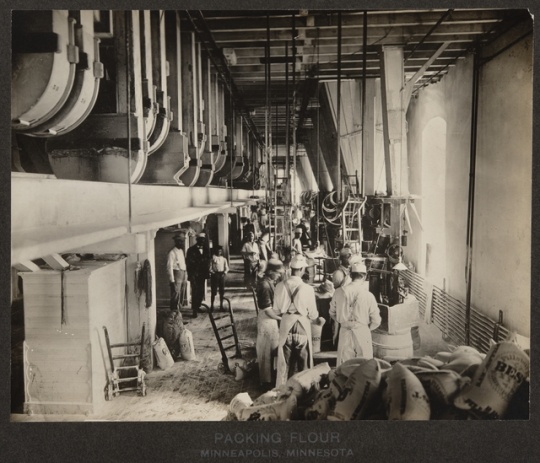
Grain mill workers initially relied on craft unions and labor groups like the Knights of Labor for representation at the turn of the century.
The passage of the National Labor Relations Act in 1935 gave workers the legal protection to organize, and grain industry workers the confidence to pursue a dedicated industrial Union.
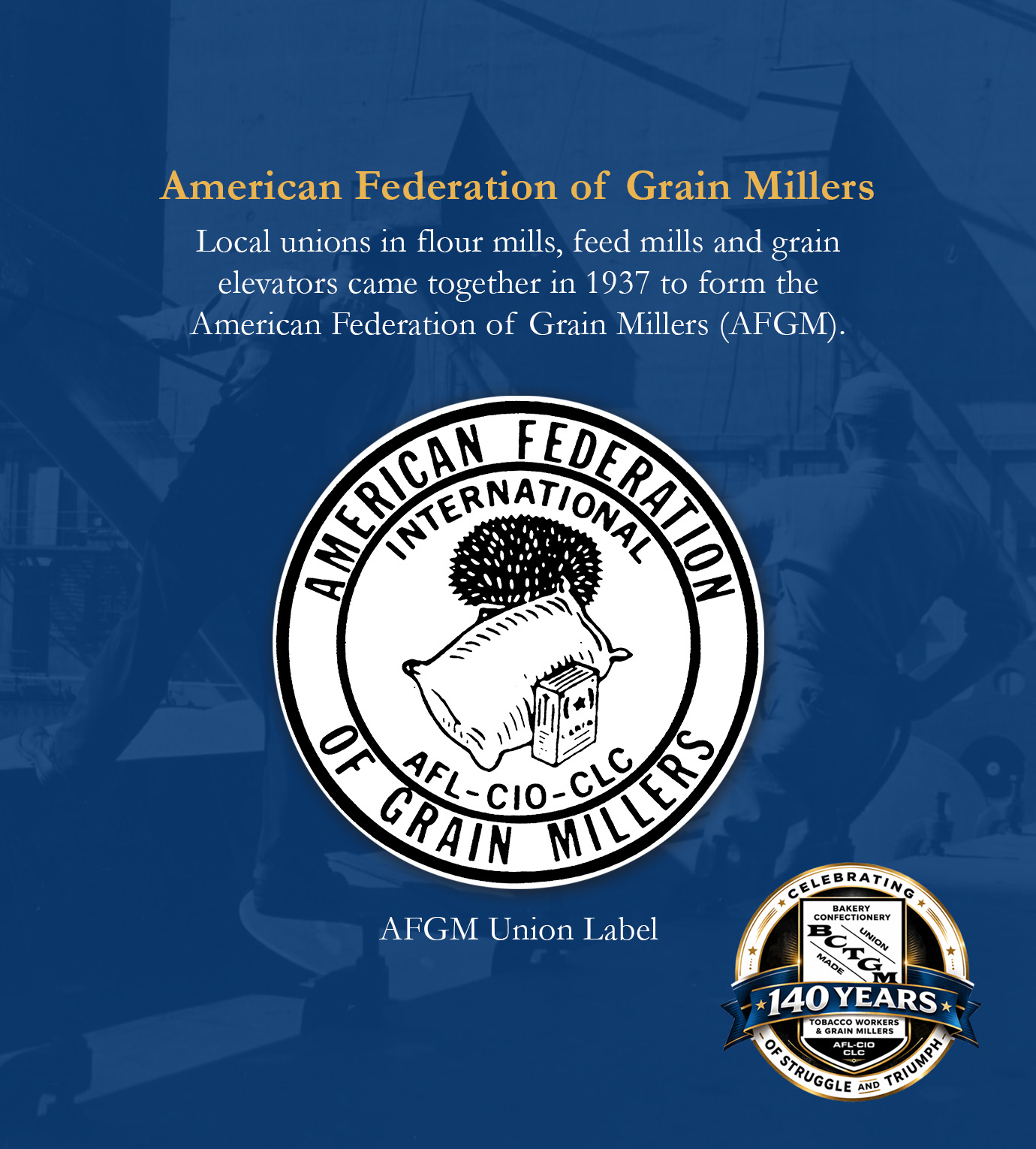
Local unions in flour mills, feed mills and grain elevators came together in 1937 to form the American Federation of Grain Millers (AFGM). With momentum from President Franklin D. Roosevelt’s New Deal, the Union was able to negotiate standardized wage scales, seniority systems, safety protections and pension and health plans.
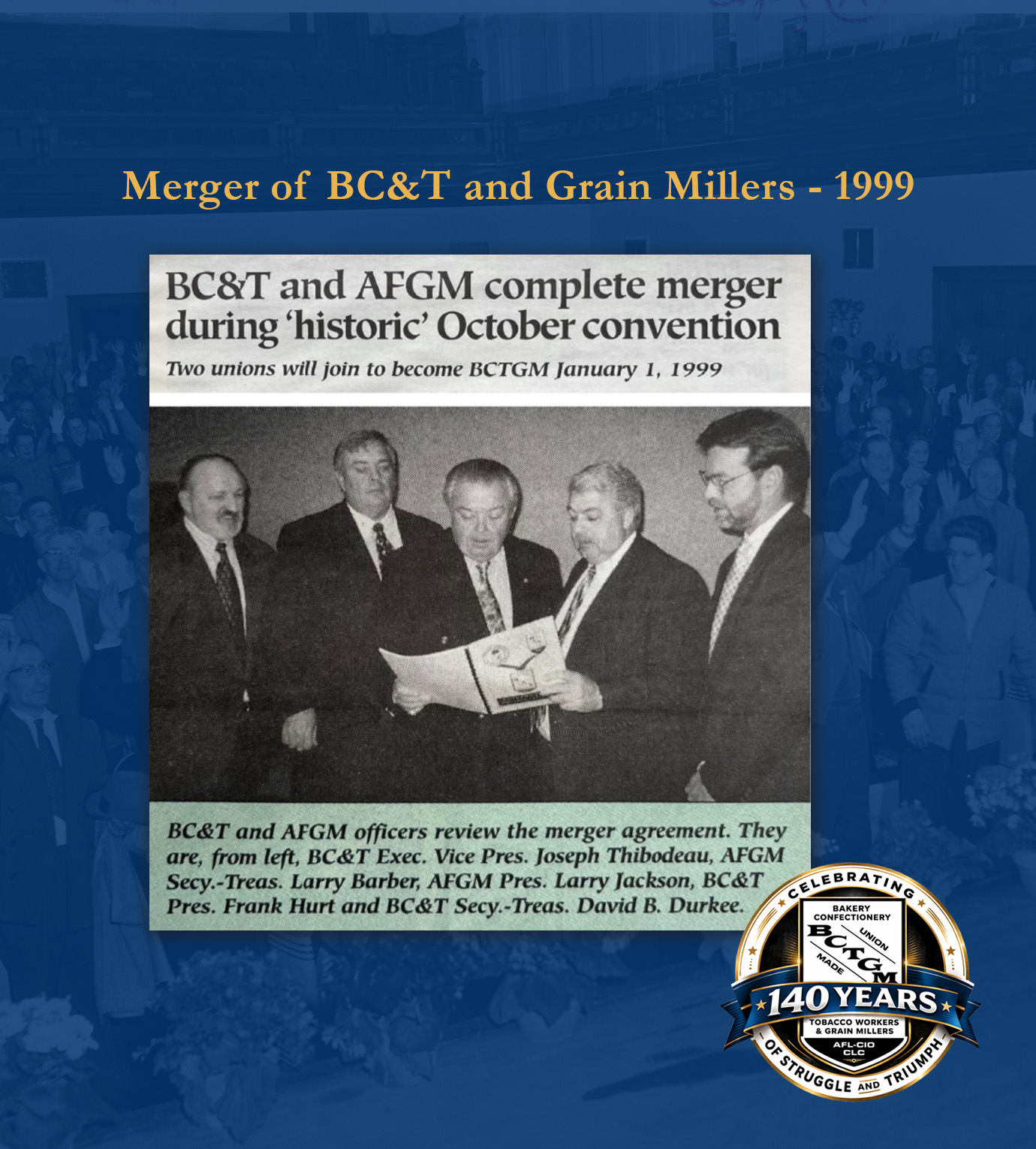
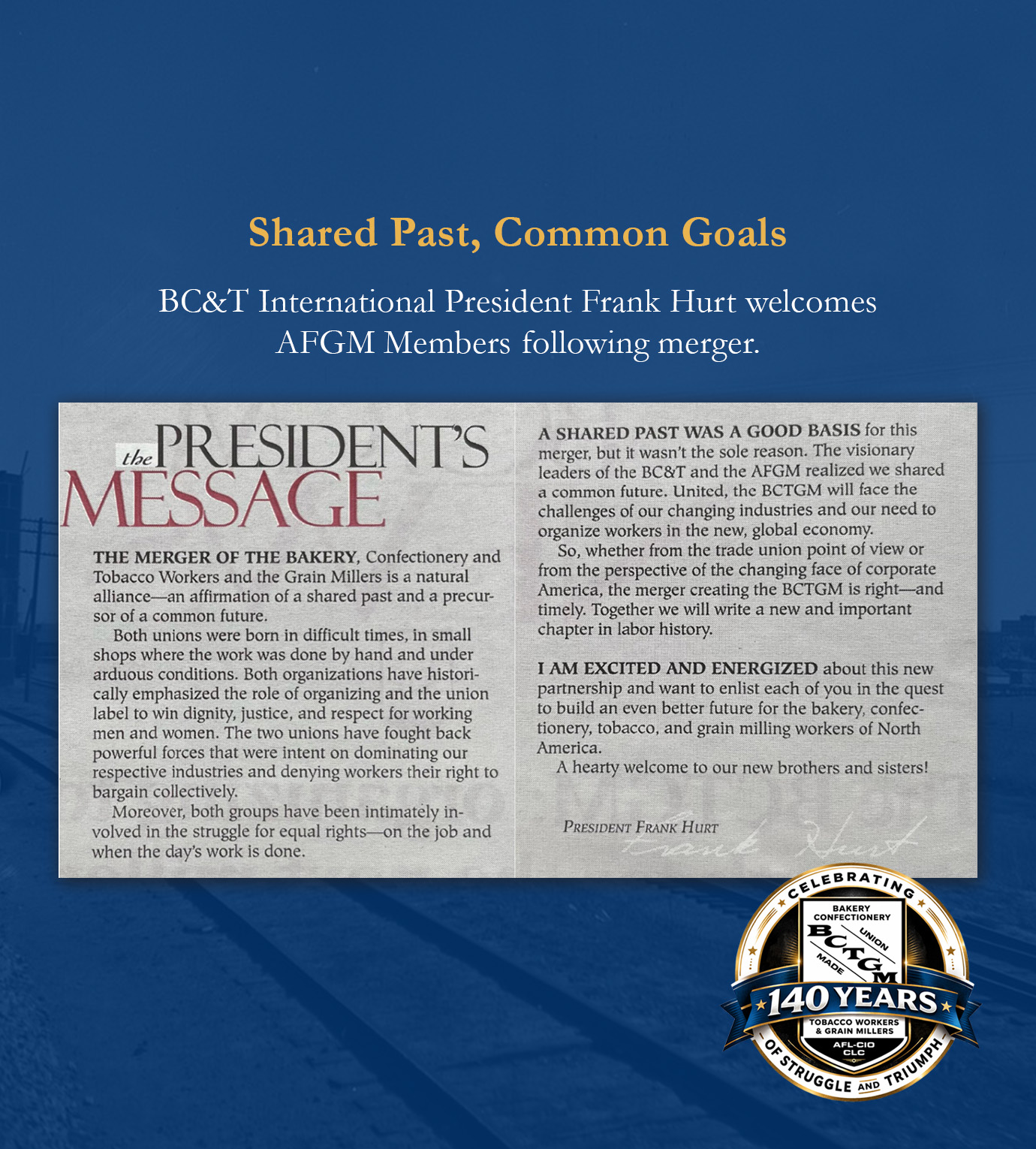
The AFGM represented workers in flour milling, animal feed production, sugar processing and grain handling until its 1999 merger with the Bakery, Confectionery & Tobacco Workers—forming what is known today as the Bakery, Confectionery, Tobacco Workers and Grain Millers International Union (BCTGM).