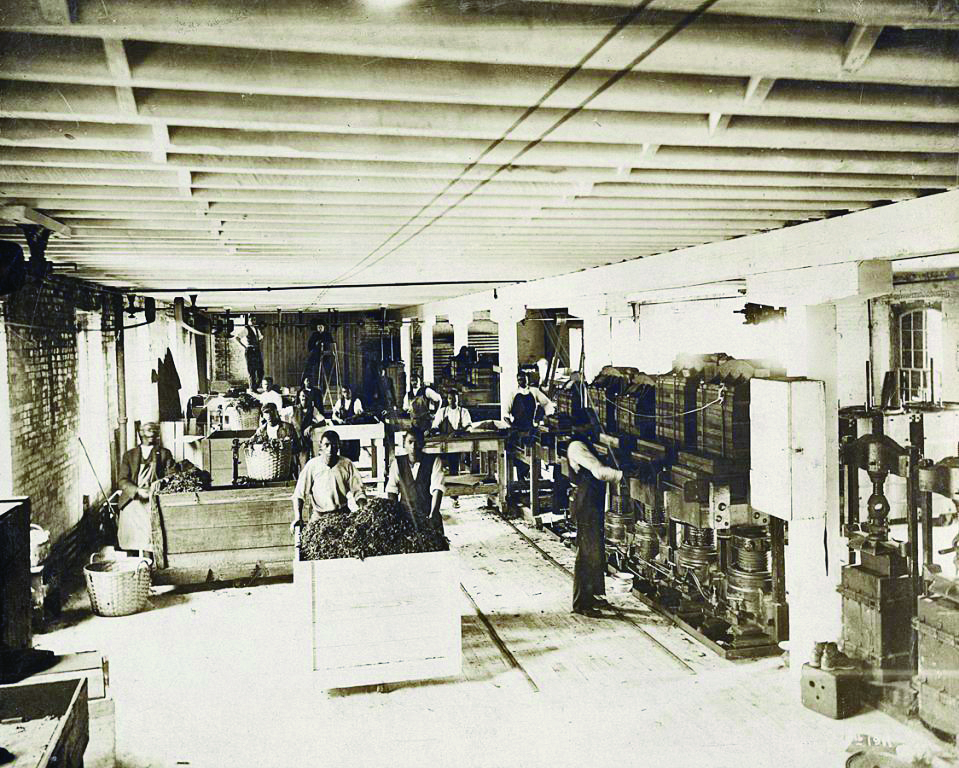
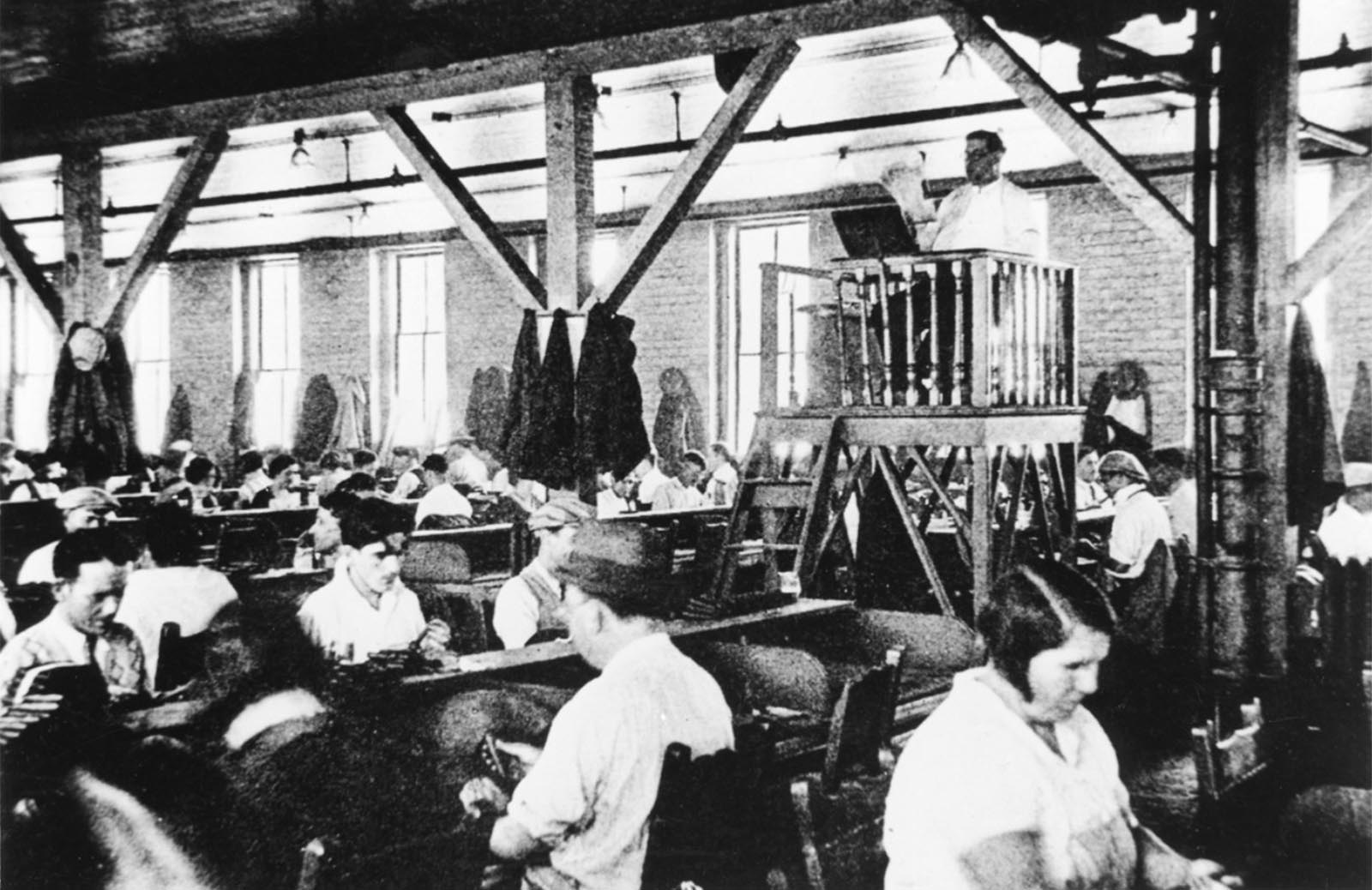
By the late 19th century, the tobacco industry was booming and massive corporations like the American Tobacco Company (also known as ‘The Tobacco Trust’) were dominating production.
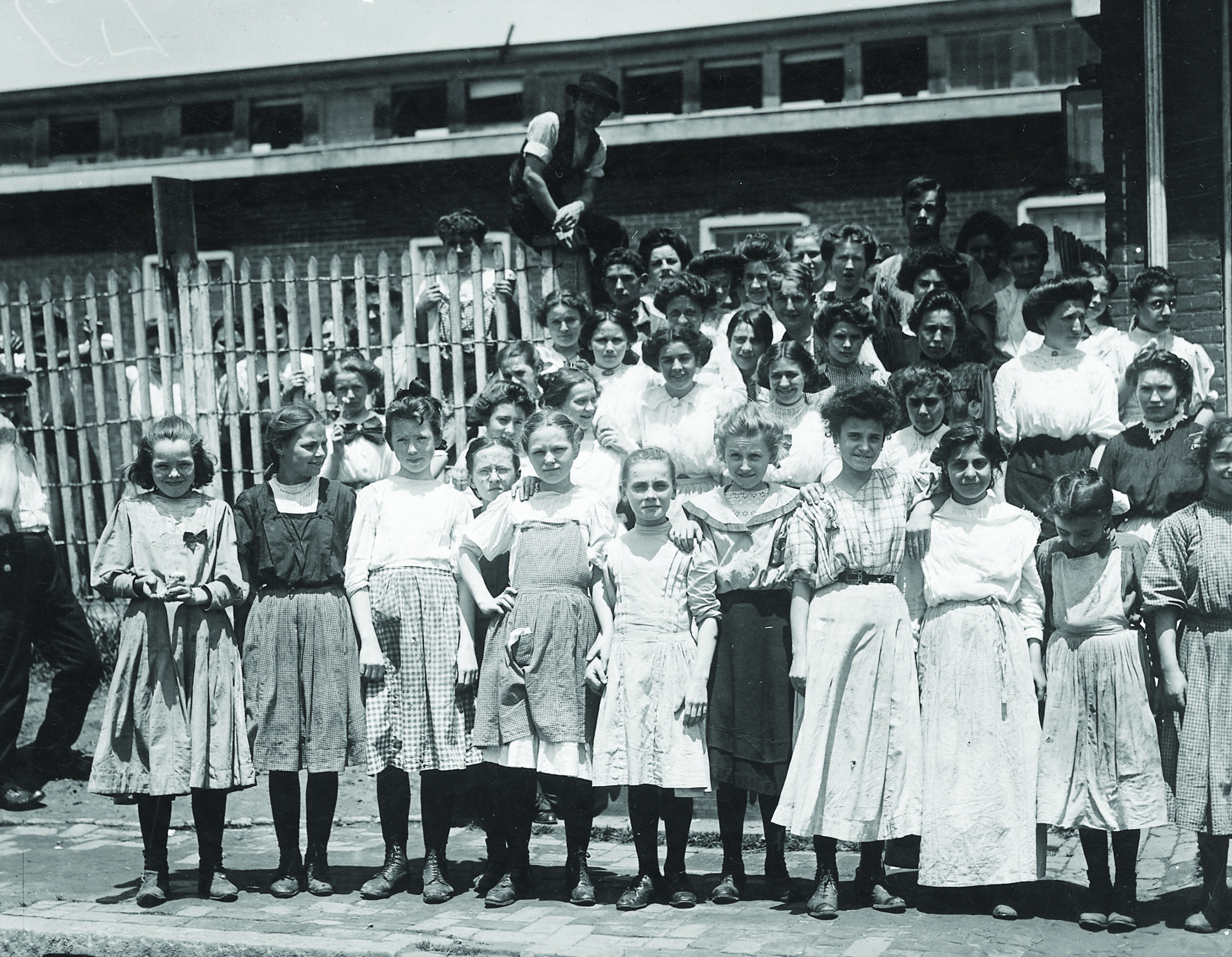
Tobacco workers—many of which were women, immigrants, black workers in the South and often even children—faced extremely low wages, long hours and dangerous factory conditions.
In 1895, cigar makers, stemmers, packers and other tobacco workers gathered in Louisville, Ky. to establish the Tobacco Workers International Union (TWIU).
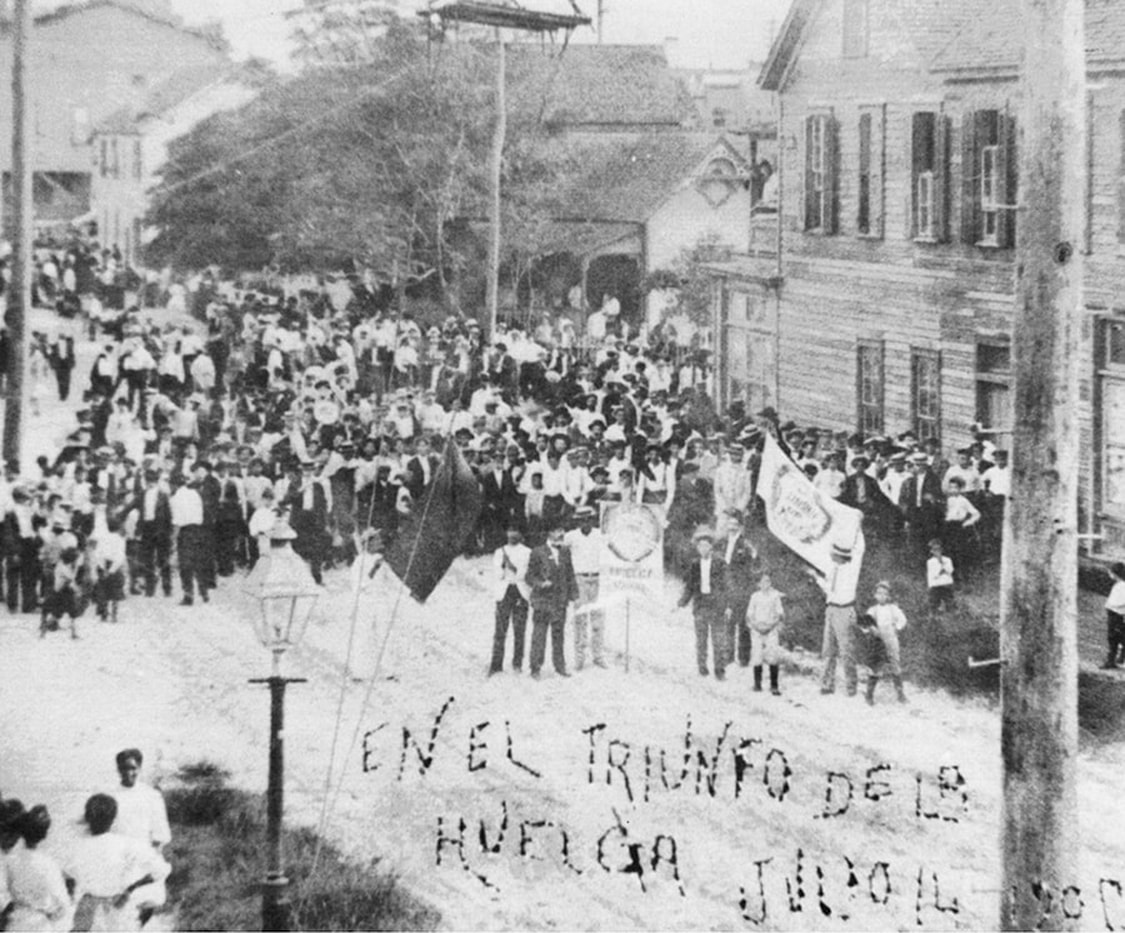
Much like the Journeyman Bakers and other Unions of the time, the TWIU struggled immensely in its early years, facing strikebreaking employers, blacklists and violence to suppress organizing.
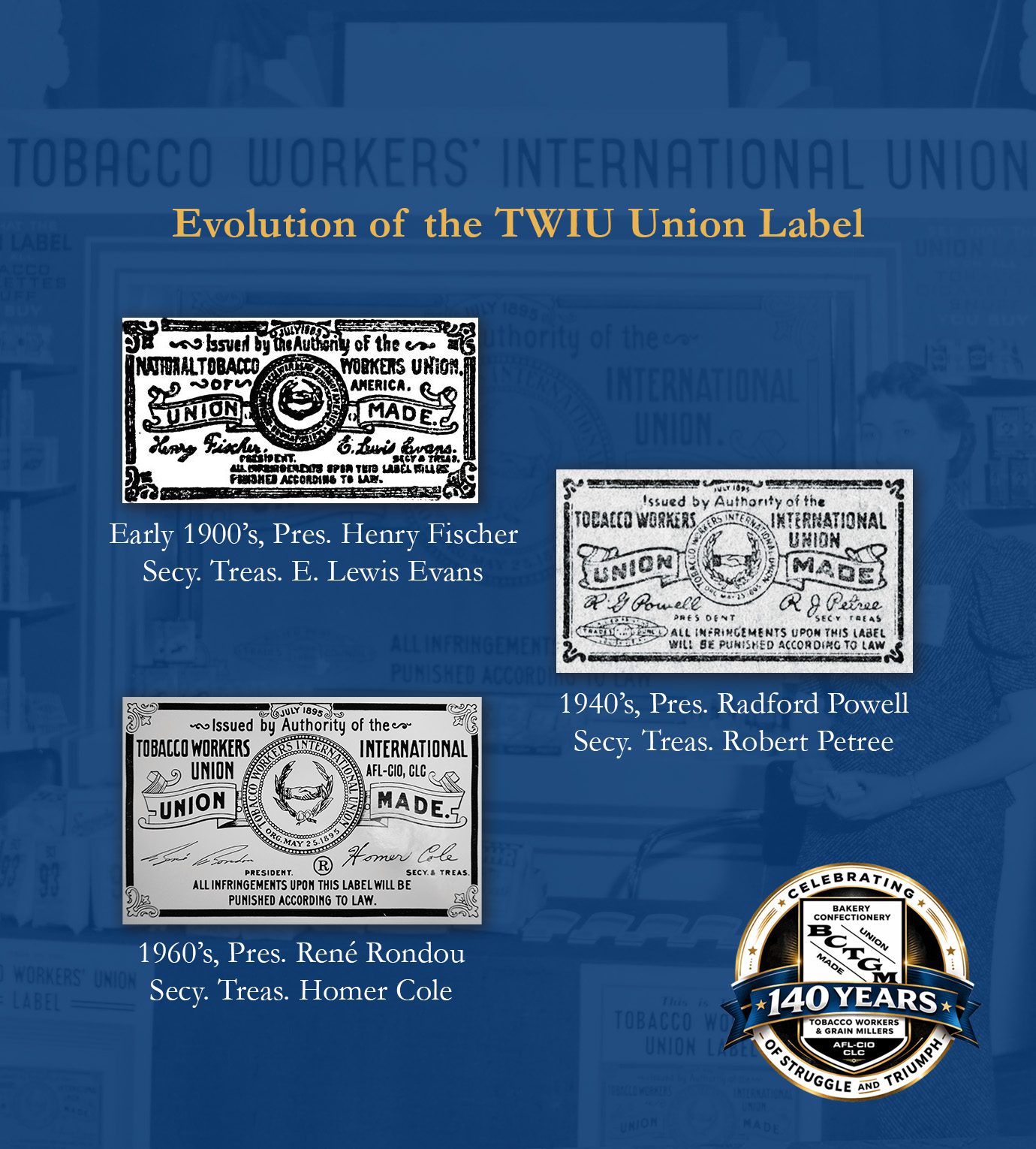
One of the enduring legacies of the early tobacco workers was an aggressive Union Label campaign, aimed at ensuring the working class only purchased union-made tobacco.
The TWIU grew a lot of respect with Unions of the AFL through this campaign, and most would follow suit. To this very day, Union-labeled goods signal to consumers that a product was made with skilled, quality craftsmanship, by workers protected under a Union contract.
The TWIU merged with the B&C in 1979, becoming the Bakery, Confectionery and Tobacco Workers International Union (BC&T).